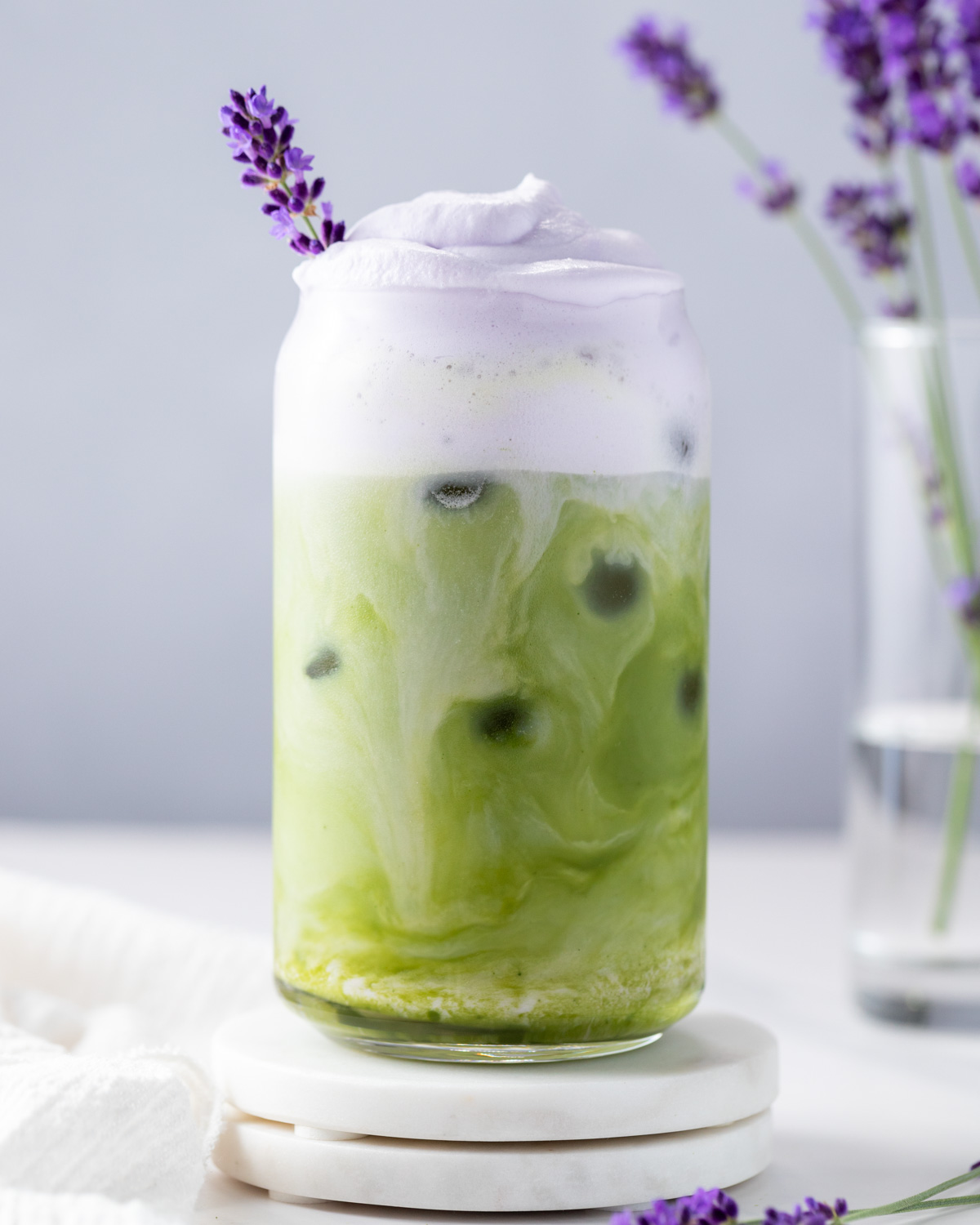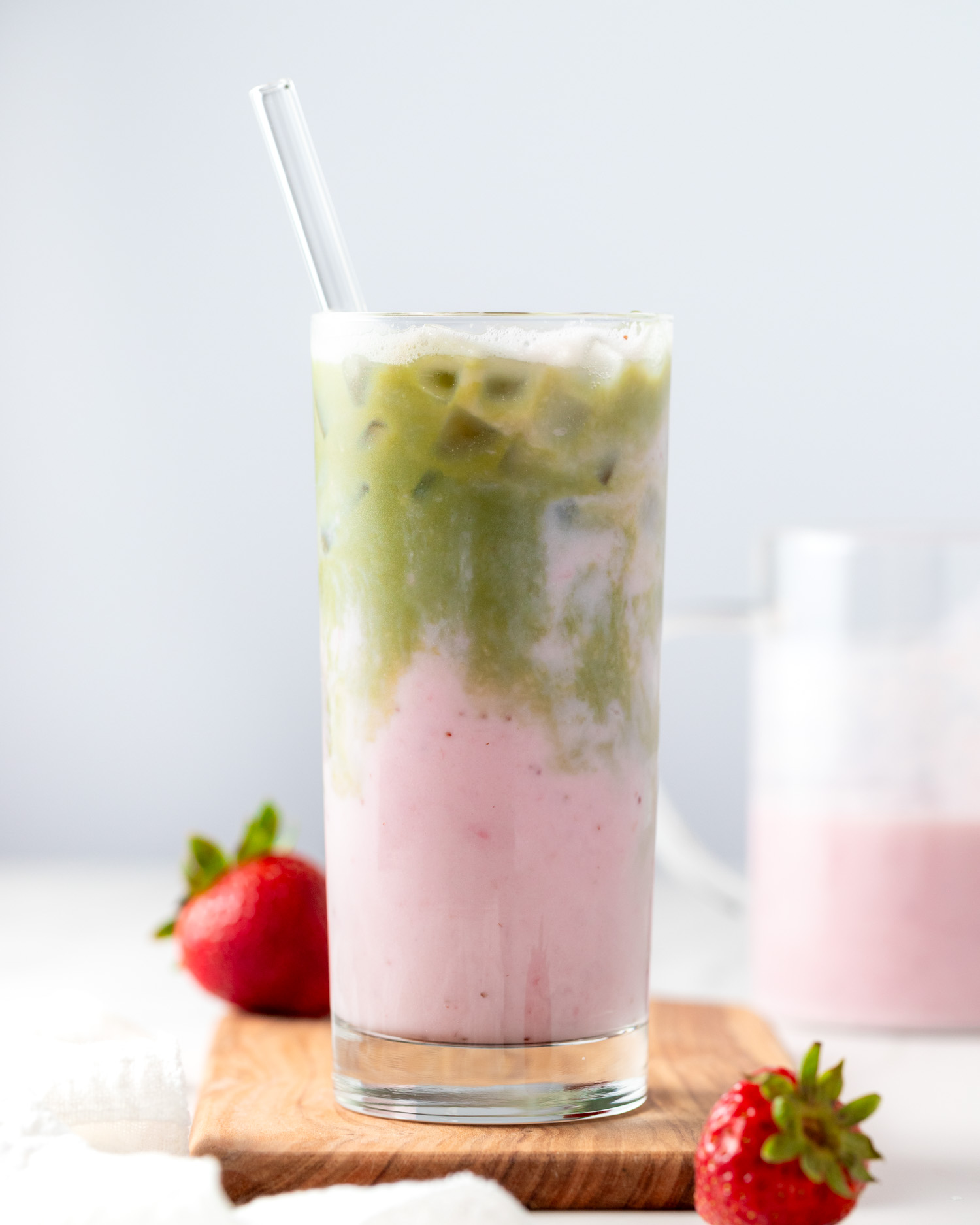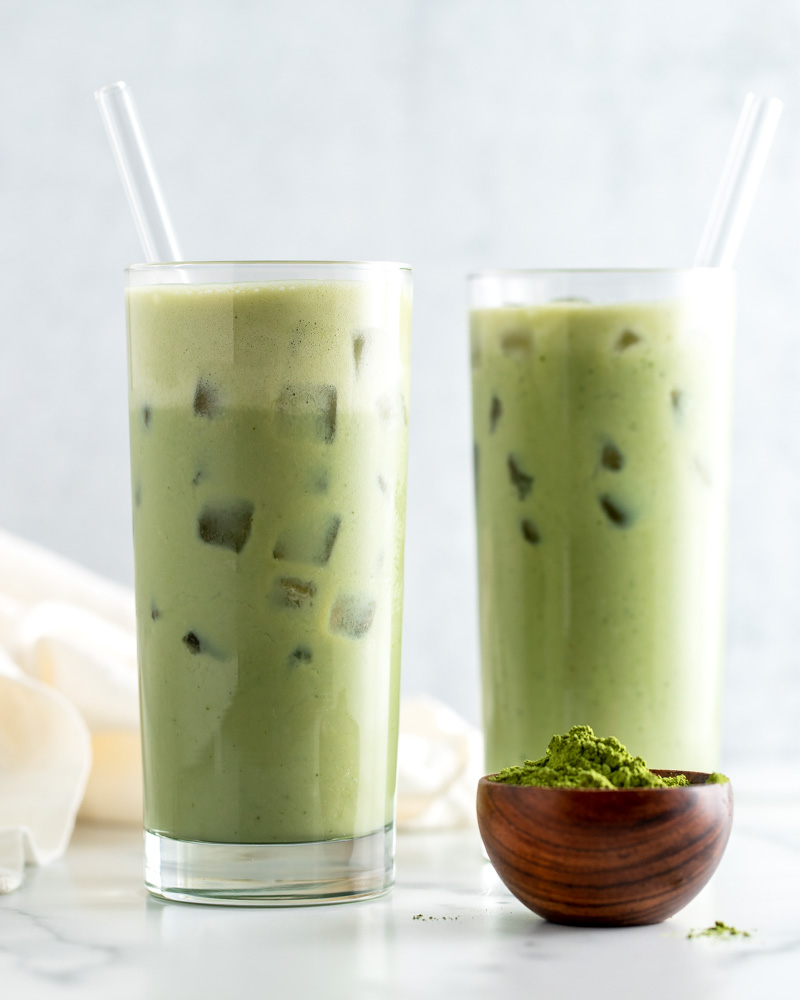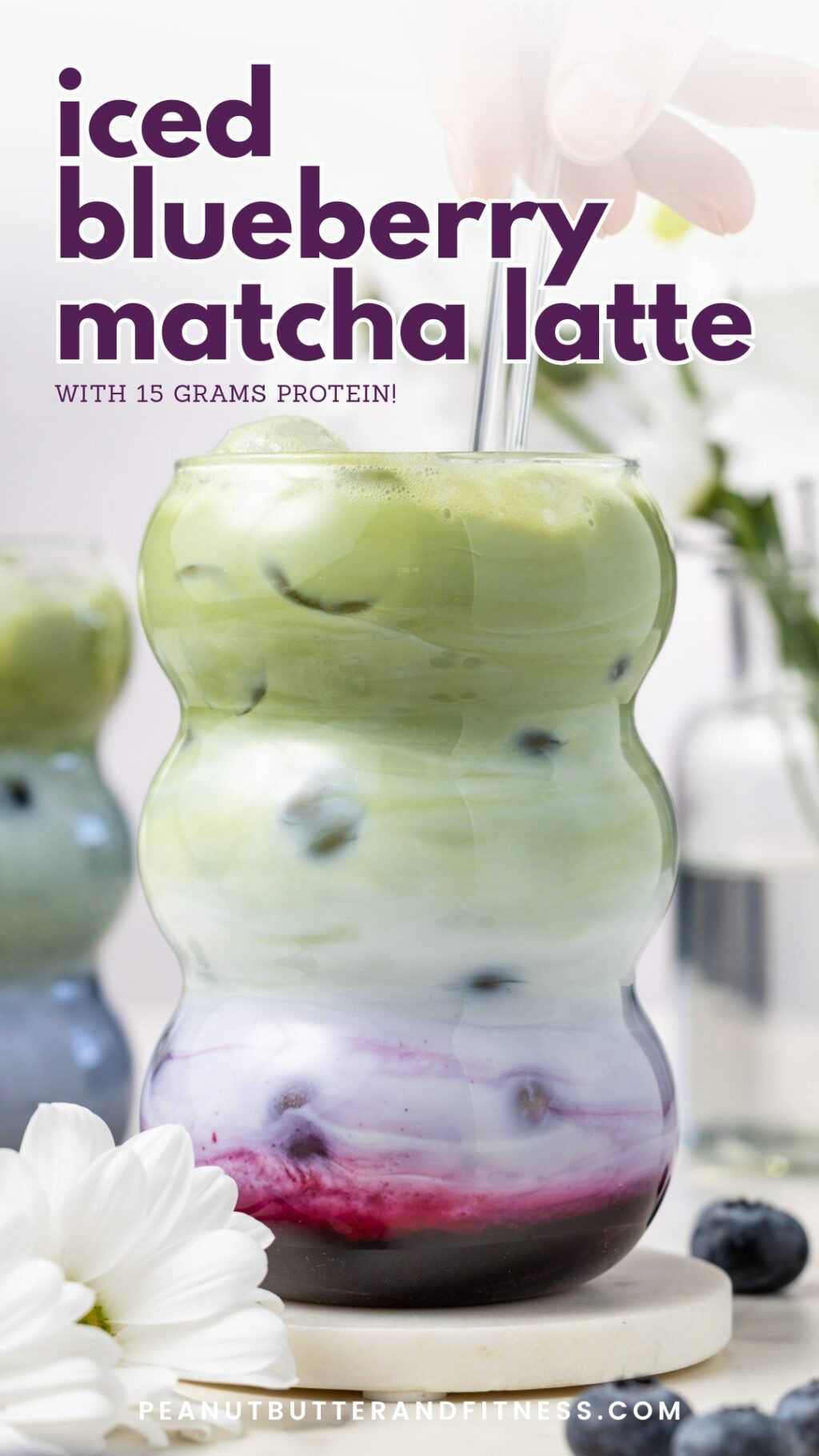

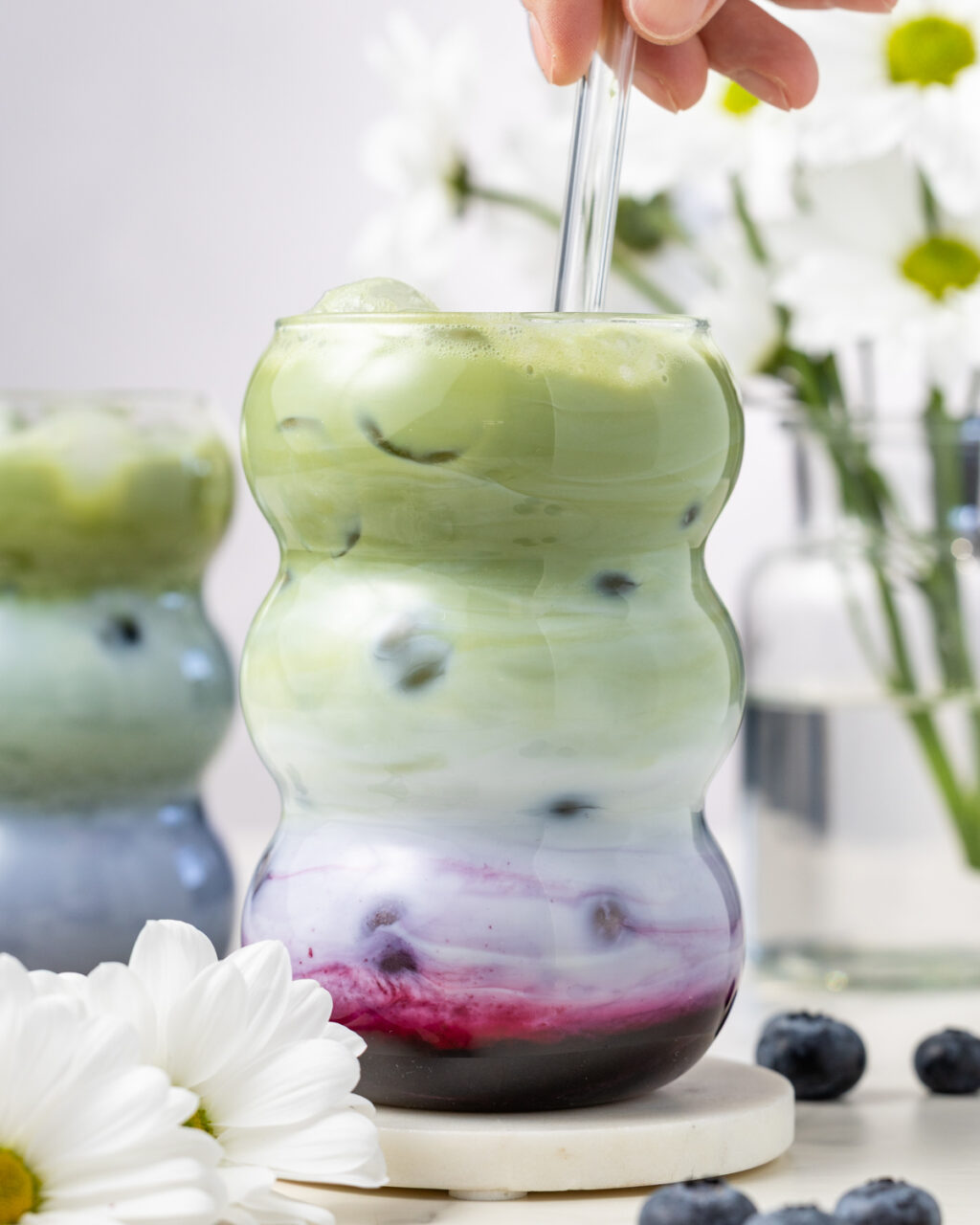
Skip the coffee shop line this spring and make this Iced Blueberry Matcha Latte at home! It combines gentle, earthy matcha flavor with bright, tart blueberry syrup and milk, all served over ice and perfect as the days begin to warm. What’s your favorite spring drink and is it also matcha?!?
make it with:
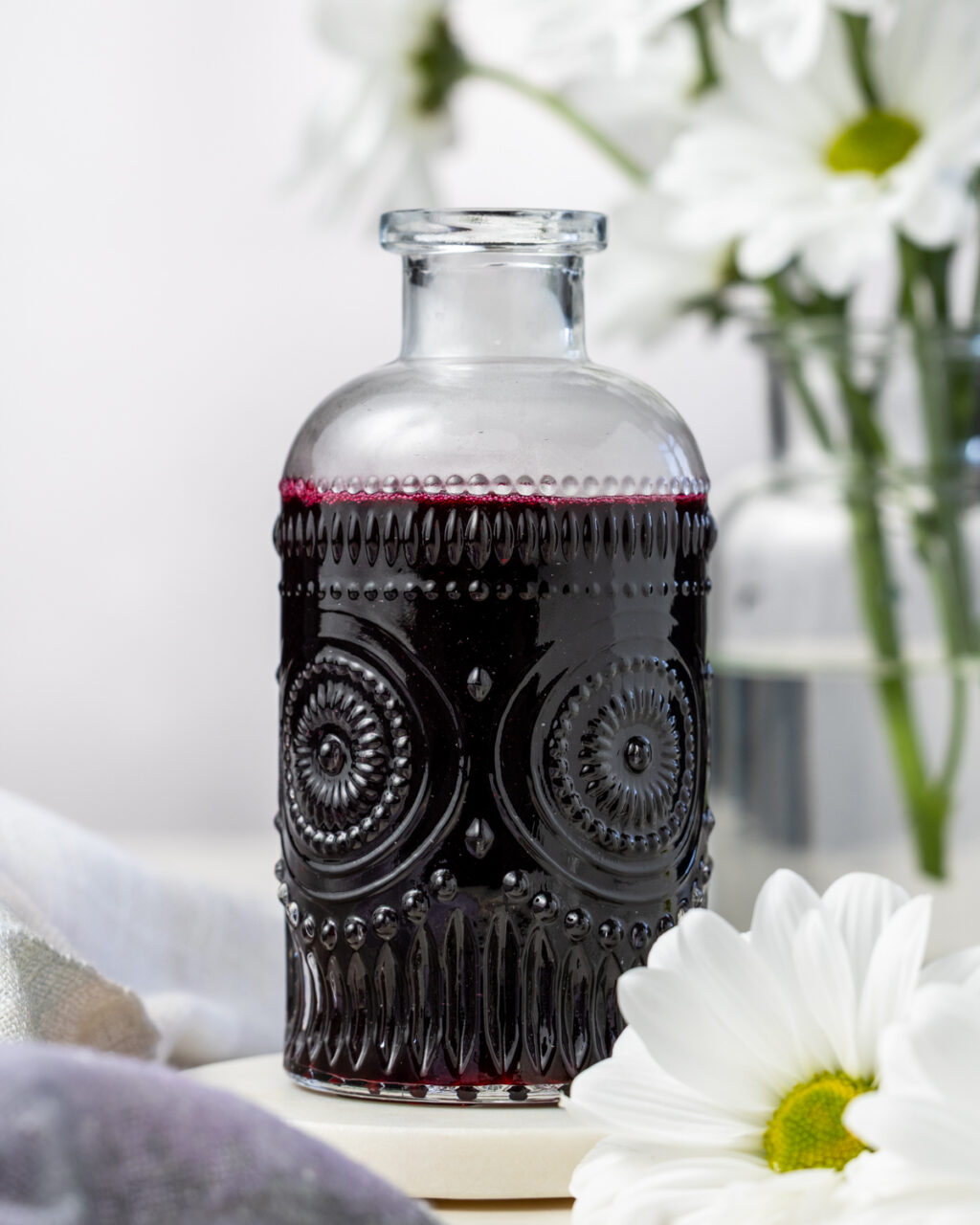
Blueberry Syrup
This easy syrup uses 4 simple ingredients and will instantly upgrade your cocktails, coffee, and tea drinks!

A Beginner’s Guide to Matcha
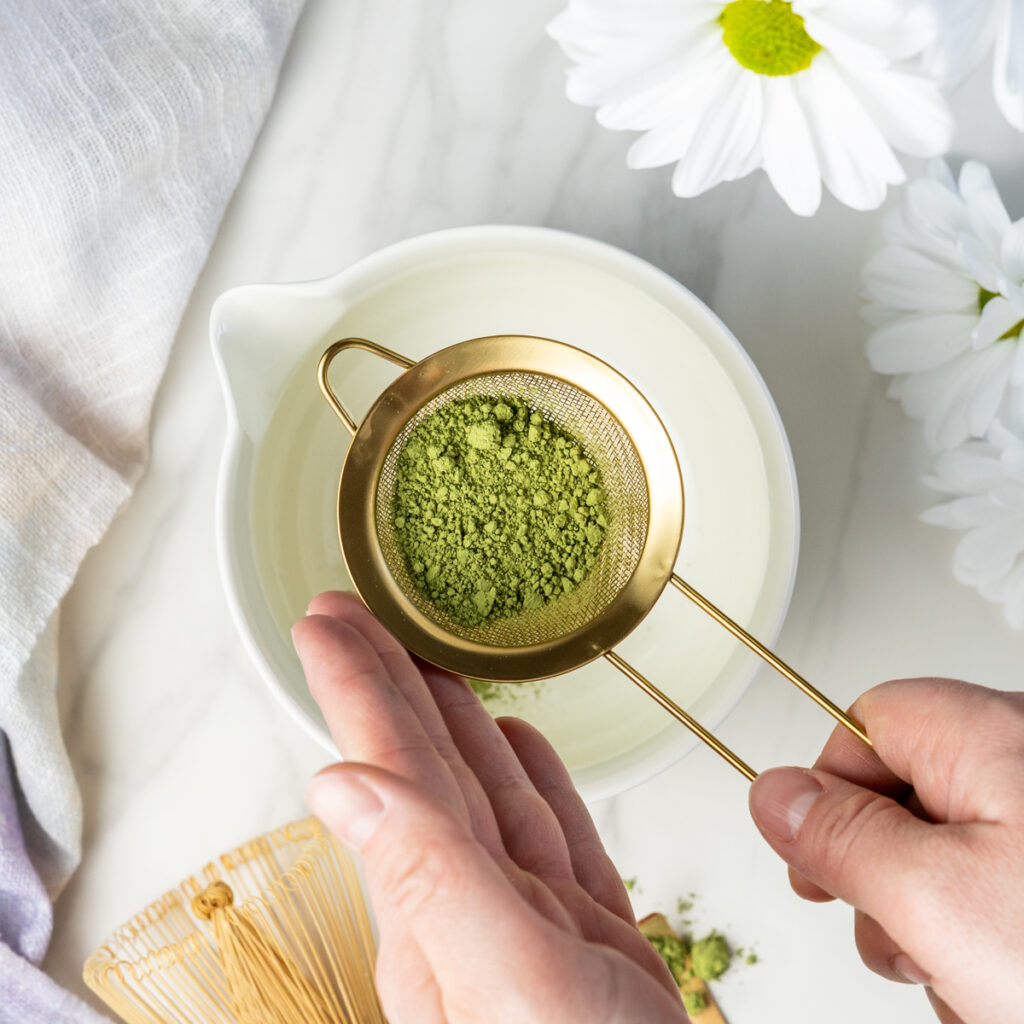
Matcha is a powdered green tea that originated in Japan around 1,000 years ago. It’s different from most teas because the entire tea leaf is ground up and mixed in hot water or milk rather than the leaves being steeped in hot water and then removed. Matcha is full of antioxidants and vitamins, so it’s a favorite of many health and fitness junkies. It’s made from the same leaves as regular green tea, but has more caffeine thanks to the whole tea leaf being used. I love its earthy delicate flavor and gentle bump of caffeine.
There are several different kinds of matcha that you’ll find on store shelves or online. I’m no matcha expert, but I’ve read up on it trying to figure out what to buy and here are some basics:
1st and 2nd Harvest
A lot of matchas will include labeling about being 1st or 2nd harvest. But what does that mean?! First harvest leaves are the most delicate and least bitter, making them the only leaves that are acceptable for ceremonial grade matcha. There’s a very narrow 2-week harvest window for these leaves after winter.
Once the first harvest is done, the same plants will continue produce leaves allowing for subsequent harvests, sometimes even up to 5 times. Matcha is usually only made with 1st or 2nd harvest leaves – 3rd harvest can be used for matcha but is reserved only for ingredient grade. These leaves are a less vibrant green with a lot of flavor, but also a lot of bitterness. Bulk tea production like tea bags and bottled green teas usually come from 3rd harvest or beyond.
Matcha Grades
Okay, so as far as I can tell based, there are officially 2 grades of matcha (ceremonial and culinary), but there’s a whole spectrum of quality when it comes to matcha, so I’ve broken it down into 3 grades with some caveats and overlap.
- Ceremonial grade – Made with the highest quality 1st harvest tea leaves that yield a vibrant green color, this matcha has a delicate, slightly sweet flavor with very little bitterness. It’s generally reserved for serious matcha drinkers and is not meant to be mixed into lattes or used in baked goods. It’s the kind of matcha that is used for a thick tea called koicha. This is also the most expensive variety you can get, at least here in the states, though some brands make several grades of matcha within the ceremonial category, including this barista blend that I really like.
- Premium or Drinking grade – You might also find this one labeled as “tea masters blend” since it can be made with a blend of 1st and 2nd harvest leaves, or even just early 2nd harvest leaves. It has more bitterness than the ceremonial grade, but also more intense flavor. This one falls somewhere between ceremonial and culinary grade matcha, though it’s often classified at the premium end of culinary matcha. This one is still great for drinking solo or mixing into lattes.
- Culinary grade – Culinary grade matcha is generally made with only 2nd harvest leaves, though this grade can be split even further into premium and ingredient grade. The premium one is made with early 2nd harvest and is still good for lattes, but can also be used for baking. Ingredient grade could even come from 3rd harvest leaves and isn’t recommended for drinking or for making lattes and is really reserved for what the name says – for use as an ingredient in other recipes. That said, most commercial applications using matcha are using this type (hi, big coffee chains!). The matcha flavor is the strongest with ingredient grade, but it’s also the most bitter, so it needs to be mixed with sugar or other ingredients to be enjoyable.


Ingredients and Substitutions
Here’s what you’ll need to recreate this Iced Blueberry Matcha Latte recipe:
- Milk – I used Fairlife 2% milk for this recipe, but whatever neutral tasting milk you enjoy will work. If you’re looking for a macro friendly milk that tastes great, check out this post.
- Matcha powder – Check out my Beginner’s Guide to Matcha above for tips on choosing a matcha powder.
- Blueberry syrup – I make mine with frozen wild blueberries. All you need is 4 ingredients and a few minutes to make this!
how can i
Add More Protein?
Anytime you’re working with matcha, I recommend caution with flavored protein. Most whey protein powders have so much sweetness and flavor that they will easily overpower the gentle earthiness of the matcha. Instead, you could use an unflavored whey or collagen whisked into the milk before adding it to the latte.
Shop for This Recipe
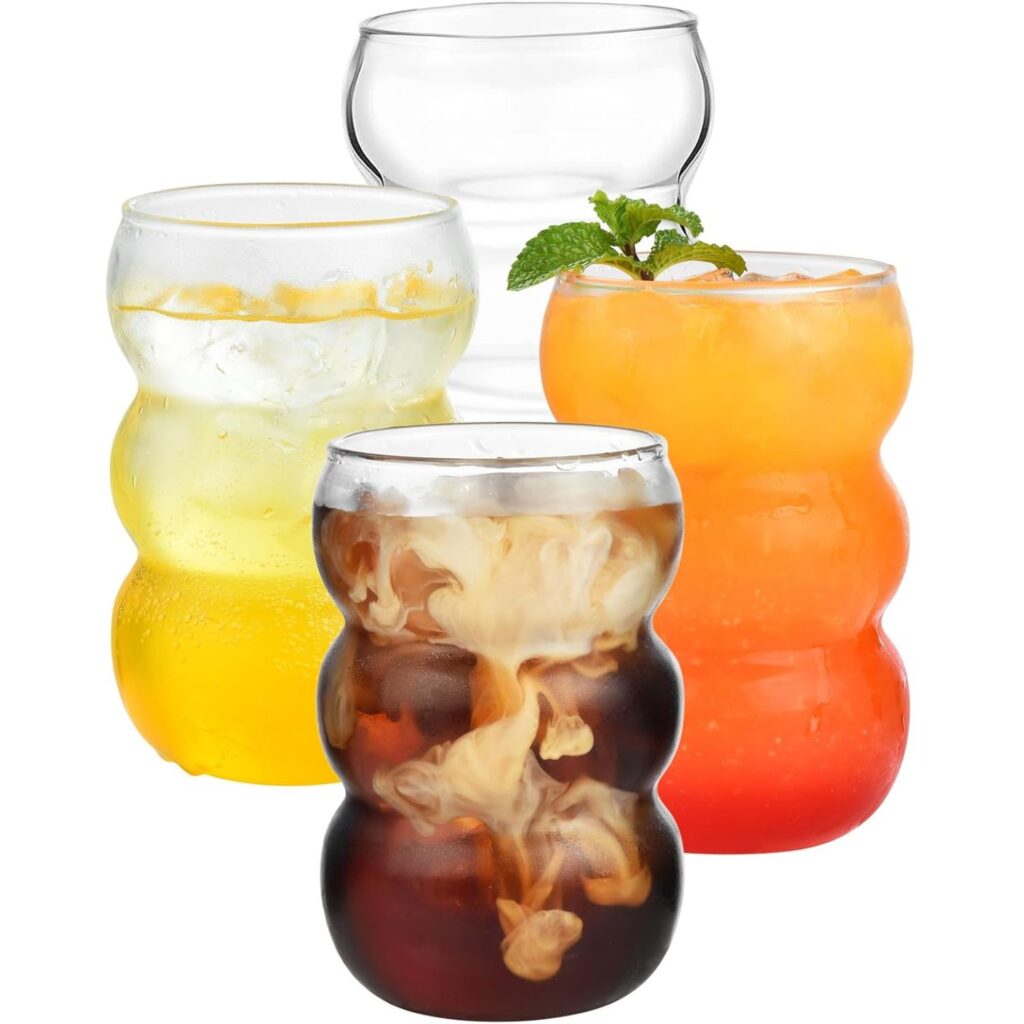
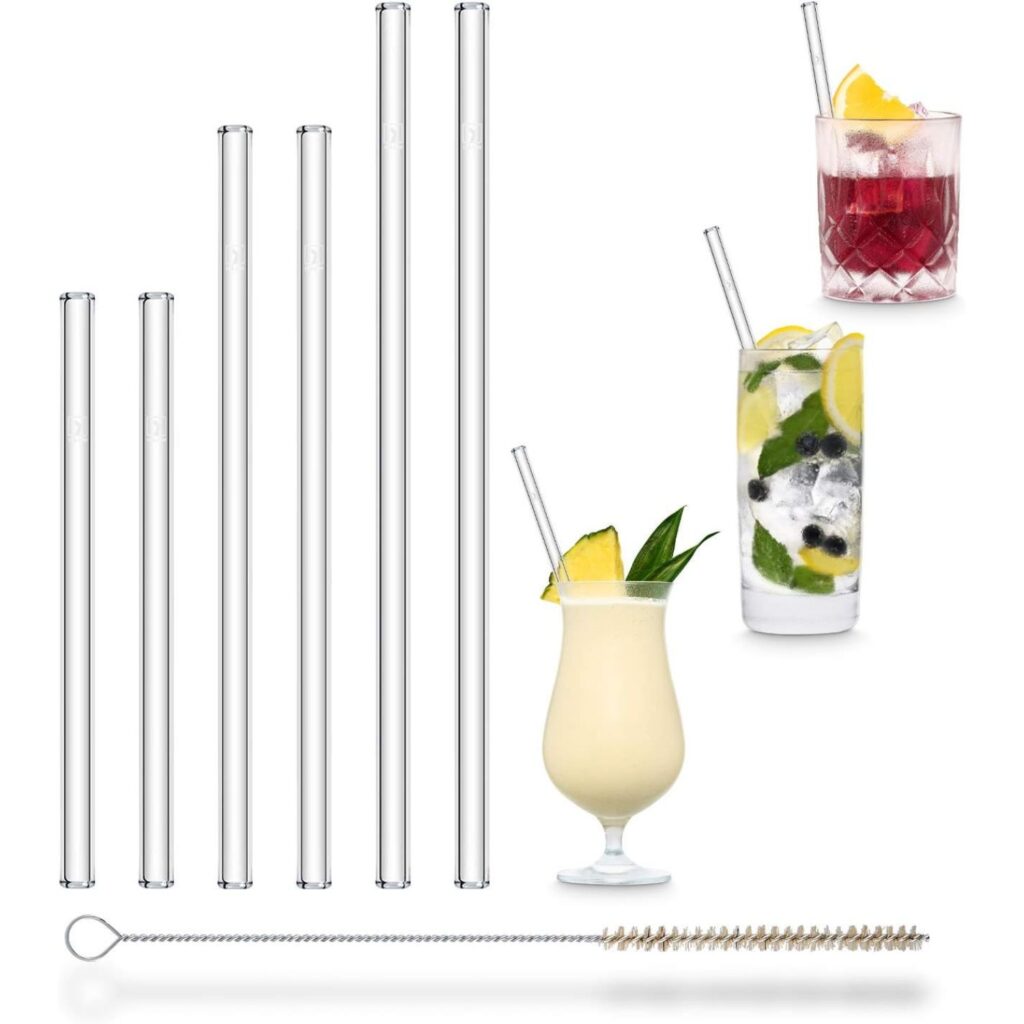
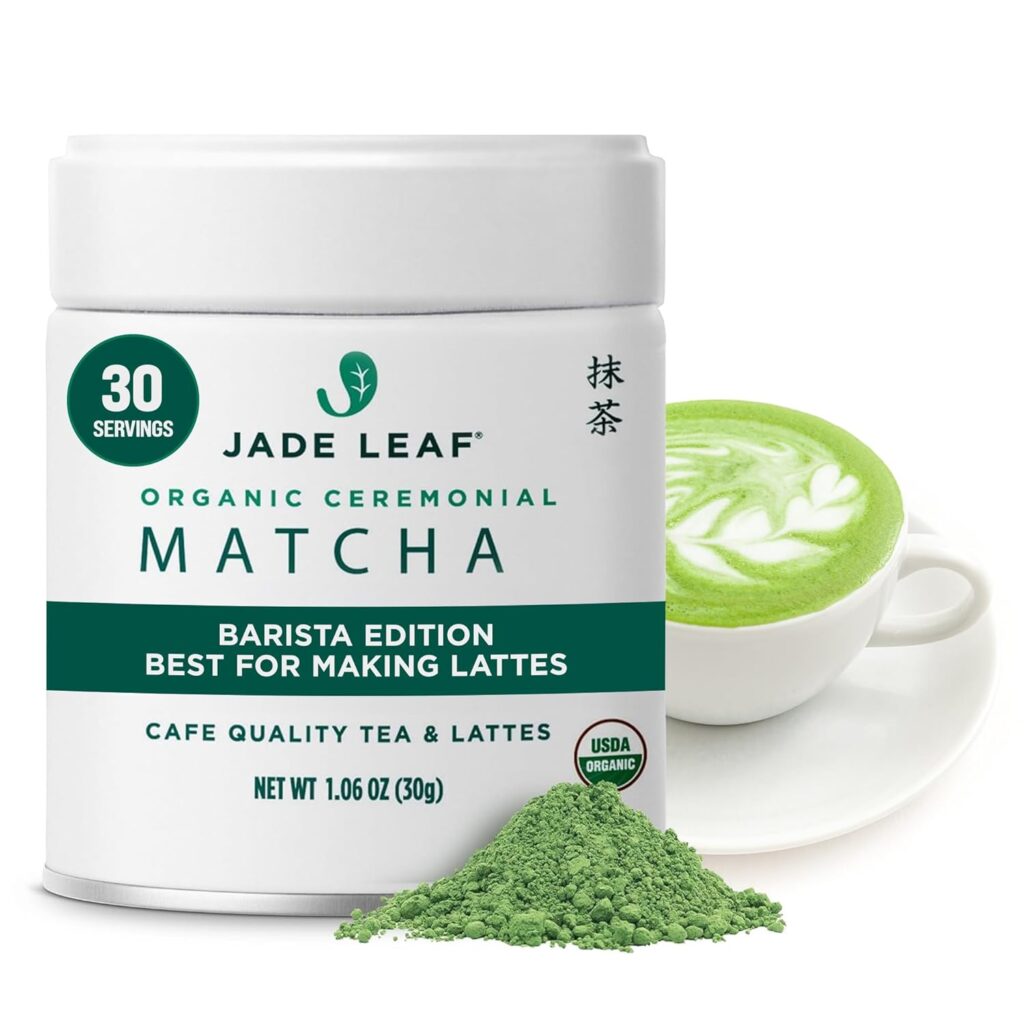
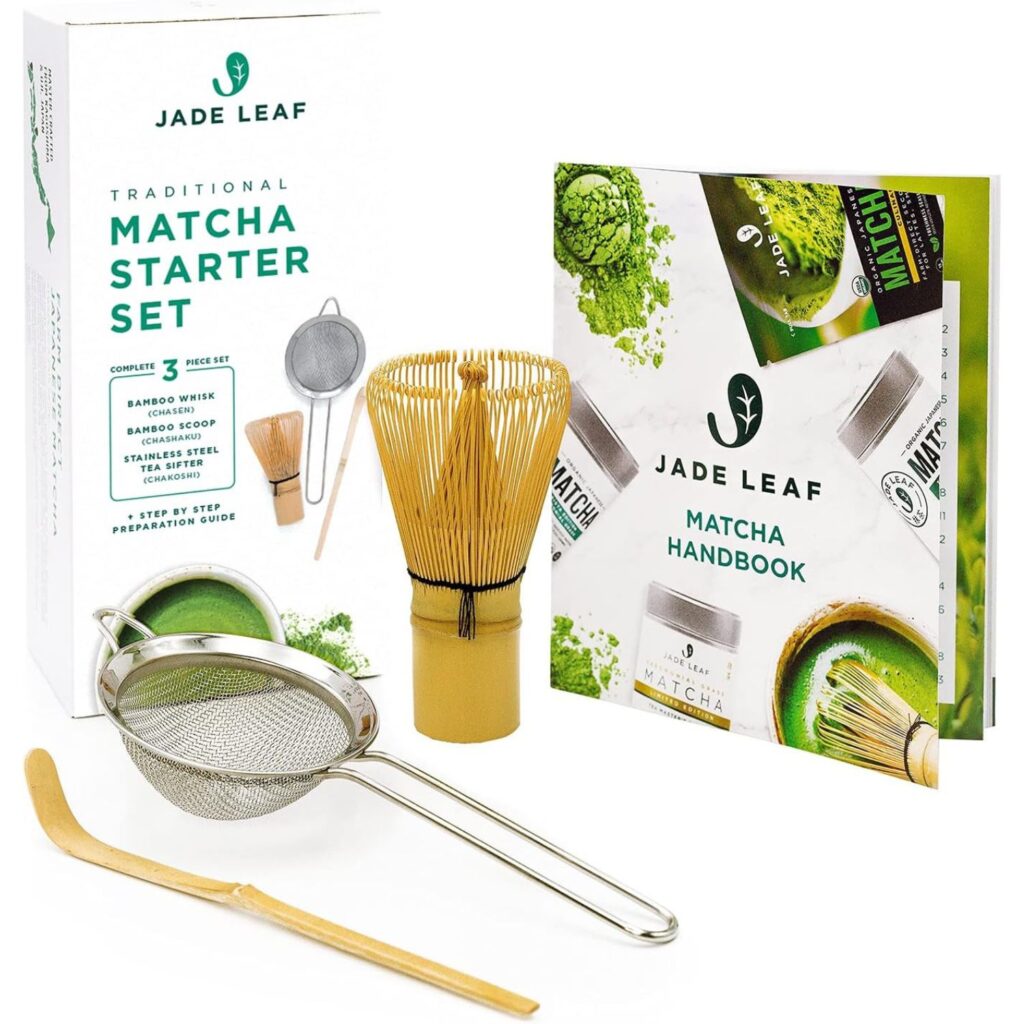
Recipe
Iced Blueberry Matcha Latte
Ingredients
- 2 cups Fairlife Milk Ultra-Filtered Reduced Fat 2%, (16 fl oz)
- 1/2 cup hot water, (4 fl oz)
- 1/3 cup blueberry syrup, (2.66 fl oz)
- 1 tbsp matcha powder, (6 grams)
- 2-3 cups ice cubes or spheres
Instructions
- Prepare the matcha by sifting 1 tbsp matcha powder into a bowl, then add 1/2 cup hot water and whisk vigorously for about 1 minute or until small bubbles have formed on the surface of the tea. Set aside.
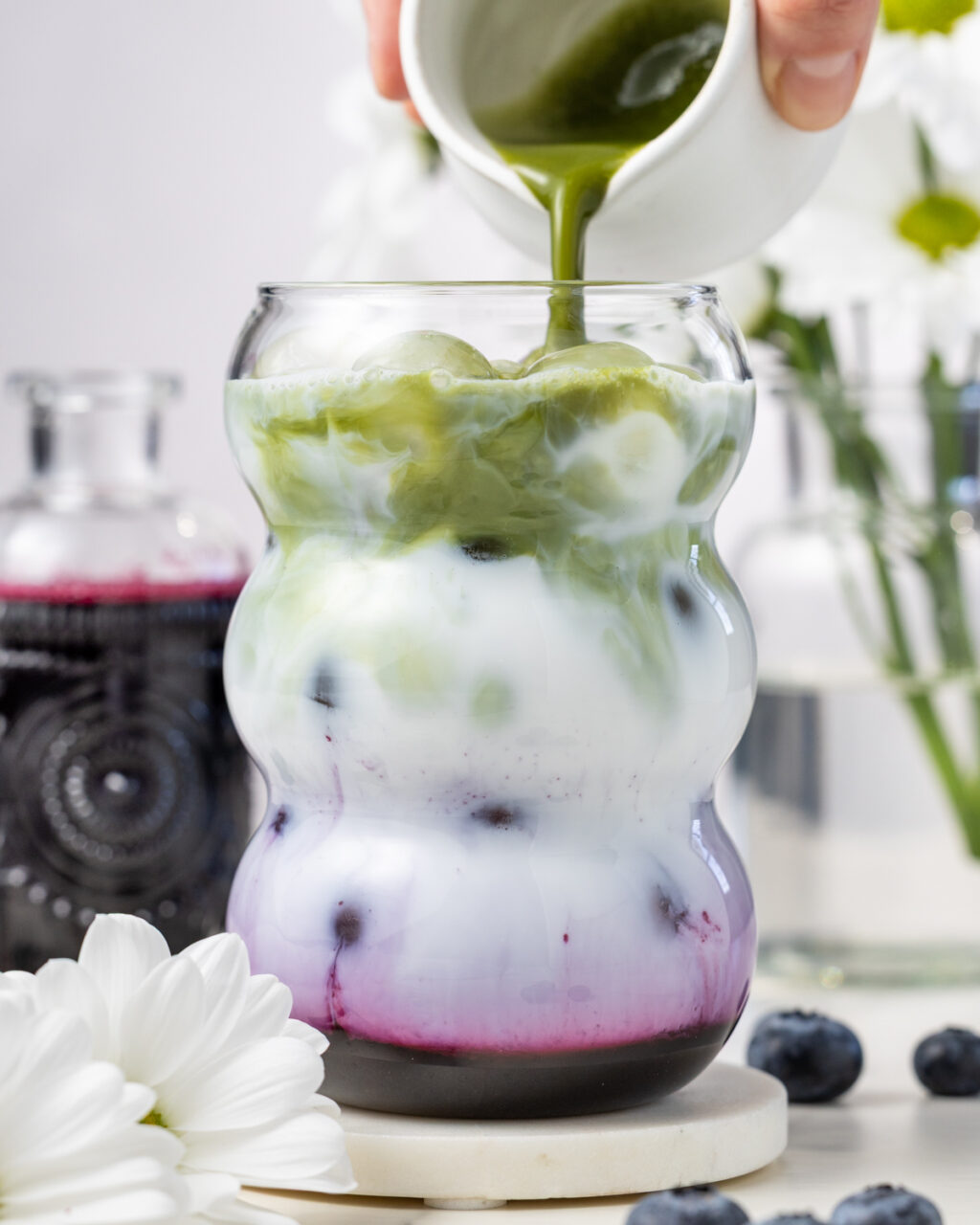
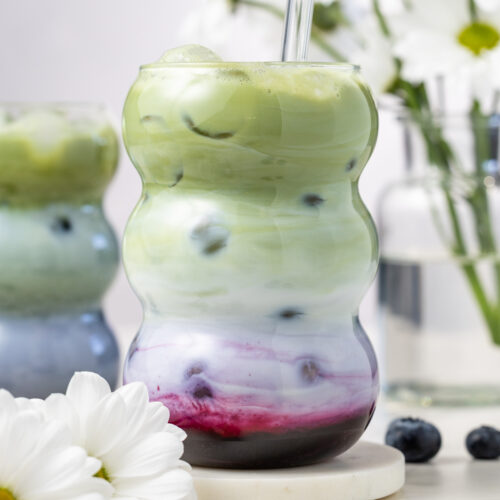
- Divide 2-3 cups ice cubes or spheres between two 16 oz glasses. Pour 1/3 cup blueberry syrup over the ice, then add 2 cups Fairlife Milk Ultra-Filtered Reduced Fat 2%. Top with prepared matcha and stir before serving.
Tips & Tricks

Nutrition Information